Speciation
The formation of a new species is called speciation. A species is defined as a group of organisms that normally interbreed in nature to produce fertile offspring, and belong to the same gene pool.
An important part of forming a new species is separation of the gene pool of a species from the gene pool of the parent population.
Speciation can be separate into two types, based on the geographical relationship of the new population to its ancestral species:
- Allopatric Speciation (different areas)
- Sympatric Speciation (same habitat)
Allopatric Speciation
It is when a species population is separated by a geographical barrier. The species are known as allopatric populations.
This occurs in the following way:
- Reduced selection pressure - a population moves into a new area free from competing species, predators, etc., with many ecological niches unfilled.
- A population explosion follows which results in increased variation as most offspring survive, so alleles that were previously selected against are now free to be expressed.
- Migration into new environments on the borders of the range gives rise to sub-species with different natural selection pressures.
- Geographical barriers arise between sub-species and races, giving rise to geographical isolation.
- The isolated populations will usually be exposed to different environmental selection pressures as they occupy different ranges.
- Some of the isolated sub-species develop genetic and chromosomal differences that will no longer allow interbreeding with the parent population. They are now genetically isolated and, thus, a new species.
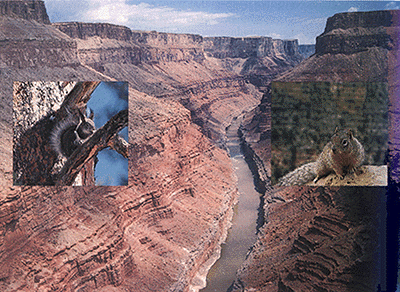
Allopatric speciation of squirrels in the Grand Canyon
The canyon is a barrier to dispersal by small mammals, and as a consequence the isolated populations can diverge.
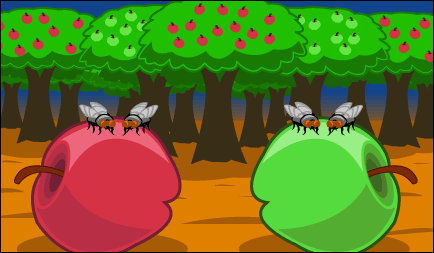
Gene flow has been reduced between flies that feed on different food varieties, even though they both live in the same geographic area.

